A springs trip and a real night out do not usually come in the same package. The clear water is a short drive into the country. The good food, the music, and the coffee are back in a city. Gainesville is the rare place where both fit inside one trip.
The best springs in Florida sit a short drive out of town, holding a steady seventy-two degrees no matter the month, cool and bright through a brutal summer and warm and bright when winter finally shows up. Float them in the morning and you can be back downtown by evening for dinner you can walk to, a show, and a quiet room in an old house. Wild Florida by day, a real downtown by night, and no long drive home in between.
This is the guide we hand people when they ask where to go. The springs worth your day, what each one is for, and the downtown that is waiting when you are done.
What to know before you go
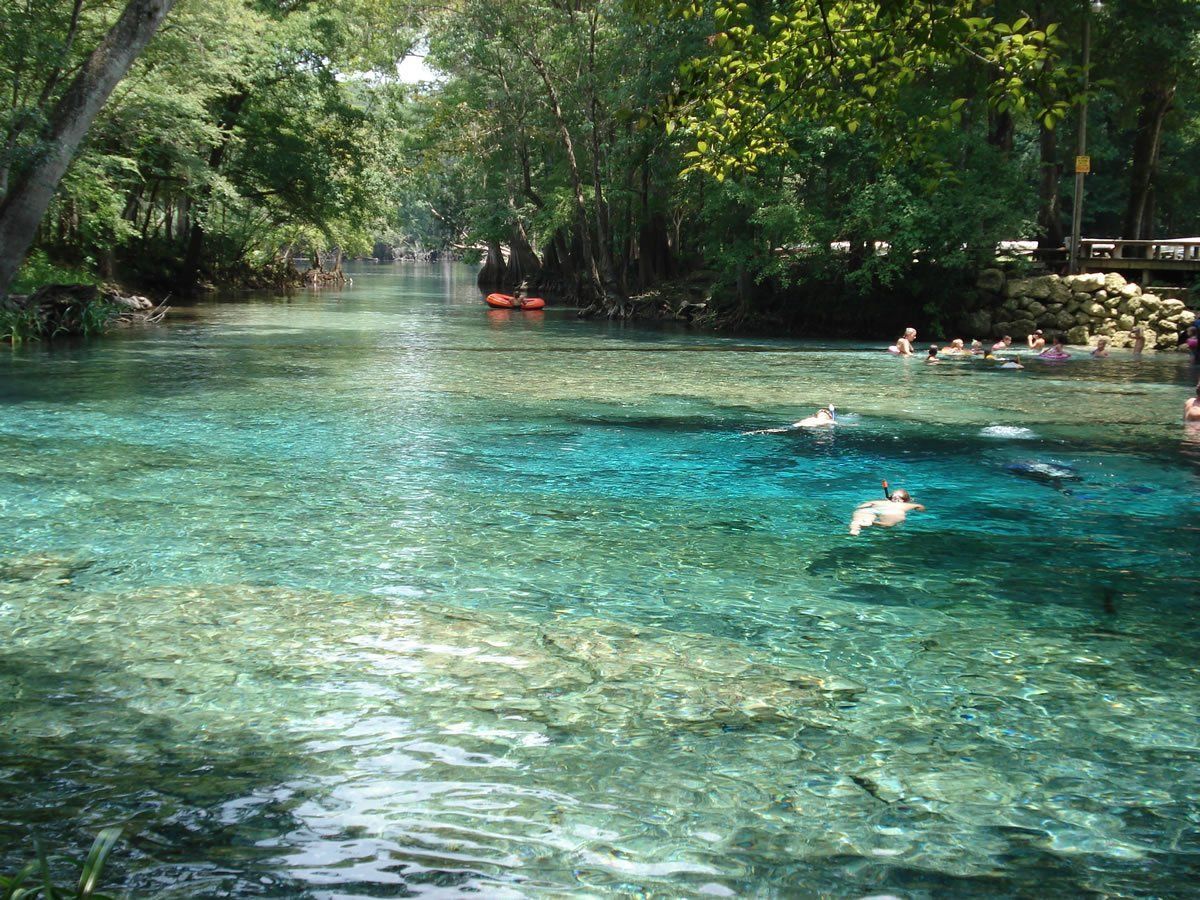
Every spring around here runs at about seventy-two degrees, all year. In July that water feels cold in the best way. In January it feels warm. Nothing about the calendar changes the temperature, only the crowds. The clarity is the part people are not ready for: at the best of them you can see straight to the bottom, and drifting over it feels like floating on glass. All of it rises out of the same vast aquifer under North Florida, which is why the springs cluster so thick in this one corner of the state.
There are two kinds of spring in this part of Florida. The state and county parks are built for swimming, picnics, and easy family days. The private parks lean toward tubing, camping, and diving. Knowing which kind of day you want sorts most of the decision for you before you ever pick a name. Several of them feed the
Santa Fe River, so you will hear that name a lot, and a few sit on the Suwannee farther west.
A few things hold true everywhere. This is wild Florida, so gators live in the rivers and you give them their room. The spring heads are generally where people swim, and the one spring with no gators at all is Devil’s Den, because it sits underground. Glass is not allowed at any of them. Most charge admission, anywhere from a few dollars at the state parks to more at the private springs, and the popular ones stop letting cars in once the lot is full. The real trick is getting there early. Check current hours and fees before you drive out, because both shift with the season.
Getting there from downtown
Almost all of the springs sit west and northwest of Gainesville, out toward High Springs, Fort White, and Williston. From downtown you are looking at twenty minutes to the closest and a little under an hour to the farthest, on easy two-lane country roads. A few practical notes. Gas up and grab a bag of ice before you leave town, because the spots out by the springs are small and not always open. Cell service thins out once you are off the main roads, so screenshot the directions before you lose the signal. And the parking lots at the popular springs are smaller than the crowds they draw, which is the whole reason we keep telling you to go early.
The springs, one by one
Ginnie Springs
If you only have time for one, this is the all-rounder.
Ginnie sits on the Santa Fe River near High Springs, about half an hour out, and it does a little of everything: swim, snorkel, tube the river, paddle, camp, or dive. It is privately run, it is often called the clearest water in the state, and it pushes something like forty million gallons a day, so the flow is real and the water never stops renewing itself.
The Devil’s Eye cave system underneath draws certified divers from all over, though the caverns are for cave and cavern training only, not a place to wander. It is a longtime favorite of the college crowd, which means summer days get loud and full. Go early, claim a spot on the bank, and let the river do the rest. It stays open year round, and even in the cooler months the water feels warm against the air.
Devil’s Den
This is the one people do not forget.
Devil’s Den is a prehistoric spring that sits inside a dry cave near Williston, about half an hour out. You walk down a staircase into the earth and the spring is waiting at the bottom, lit by a single opening in the rock that drops a column of daylight onto seventy-two degree water. You snorkel or dive it by reservation, and there is no open swimming, so it is a different kind of day than the river springs and you plan it ahead. It is also one of the only springs around with no gators, on account of being underground. There are cabins and a pool above if you want to stretch it into an overnight, though we would rather you came back to town.
Gilchrist Blue Springs
The easy family swim.
Gilchrist Blue is a state park near High Springs, about forty minutes out, with a clear swimming spring, a sandy edge to wade in from, room to snorkel, and a few smaller springs to wander between. It is calmer than Ginnie and built for a slow day: a cooler, a shaded spot, and kids who can get in and out without much worry. There is camping if you want to stay over, but it makes an easy in-and-out day from downtown.
Poe Springs
The close one.
Poe is the largest spring in Alachua County and one of the nearest to town, around twenty-five minutes out near High Springs. It is a county park, so it is simple and affordable: swim, tube, picnic, let the kids loose on the playground, walk a short trail. When you want water without much of a drive, or when you only have half a day, this is the pick. It does not carry the fame of the others, which is part of why it tends to stay a little calmer.
Rum Island and the rest
Rum Island is a small spot on the Santa Fe River that locals love for being cheap and low-key, the kind of place you go when you want the water without the parking lot. Divers add
Blue Grotto near Williston, an open-water cavern dive, to their list. Farther out,
Hart Springs and
Otter Springs lean toward camping and long, slow days, and Silver Springs over near Ocala runs the old glass-bottom boats if you would rather stay dry and still see the water. And in the cold months,
Manatee Springs near Chiefland fills with manatees, which is a trip worth taking on its own. We wrote that one up separately.
Which spring for which day
If you want to float and do nothing, go to Ichetucknee. If you want one place that does everything for a group, Ginnie. If you want a day you will be telling people about for years, Devil’s Den. If you want an easy swim close to town with kids, Poe or Gilchrist Blue. If you dive, Ginnie’s cave system, Blue Grotto, or Devil’s Den. And if you want quiet and cheap, Rum Island. Tell us what kind of day you are after when you check in and we will point you to the right water and the fastest way to it.
What to bring, and a few rules
Water shoes, because the limestone is sharp in places. A dry bag for your phone and keys. Cash, since a few of the smaller springs still prefer it at the gate. Reef-safe sunscreen, put on well before you get in. And a cooler if you are settling in for the day, with no glass anywhere. A change of dry clothes for the ride back is the small thing people forget and always wish they had.
The rest is simple. Get there early in summer, because the popular springs close their gates once the lot fills and there is nothing worse than driving an hour to be turned around. Pack out everything you bring in. Give the wildlife room and do not chase it. These springs are old and fragile, and the rules that feel fussy are the reason the water is still clear. Leave it better than you found it and it will still be here the next time you come.
When to go
The water is seventy-two degrees every day of the year, so there is no wrong season, only busier and quieter ones. Summer is the peak, when everyone in town has the same idea, which is exactly why you arrive early. Spring and fall are calmer and the water feels identical. Midweek is quieter than the busy stretches if your schedule allows it. And in winter, when the rivers cool, the manatees crowd into the warm springs, which turns a plain springs trip into a
wildlife trip. There is more on that in
our manatee guide.
And then, downtown
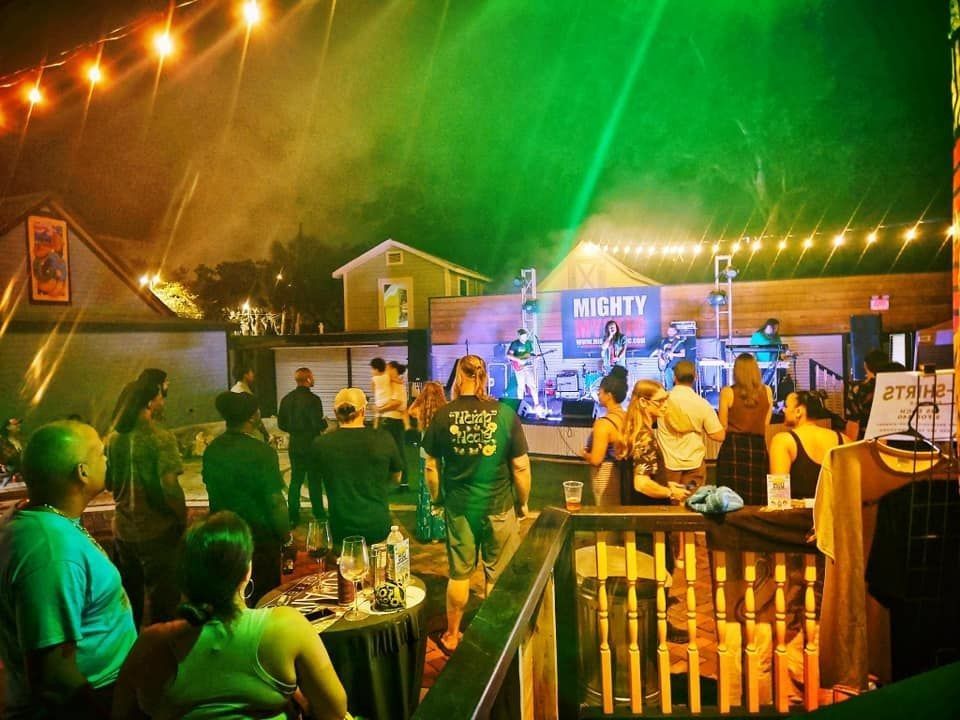
Here is the half of the trip most springs days are missing. When the swimming is done, you are not stranded an hour from anything. You are a few blocks from a downtown you can walk end to end: dinner without a drive, a drink after,
live music most nights, the Hippodrome for a film or a show, and
coffee in the morning before you go do it again. Rinse off, change, and walk out the door into downtown.
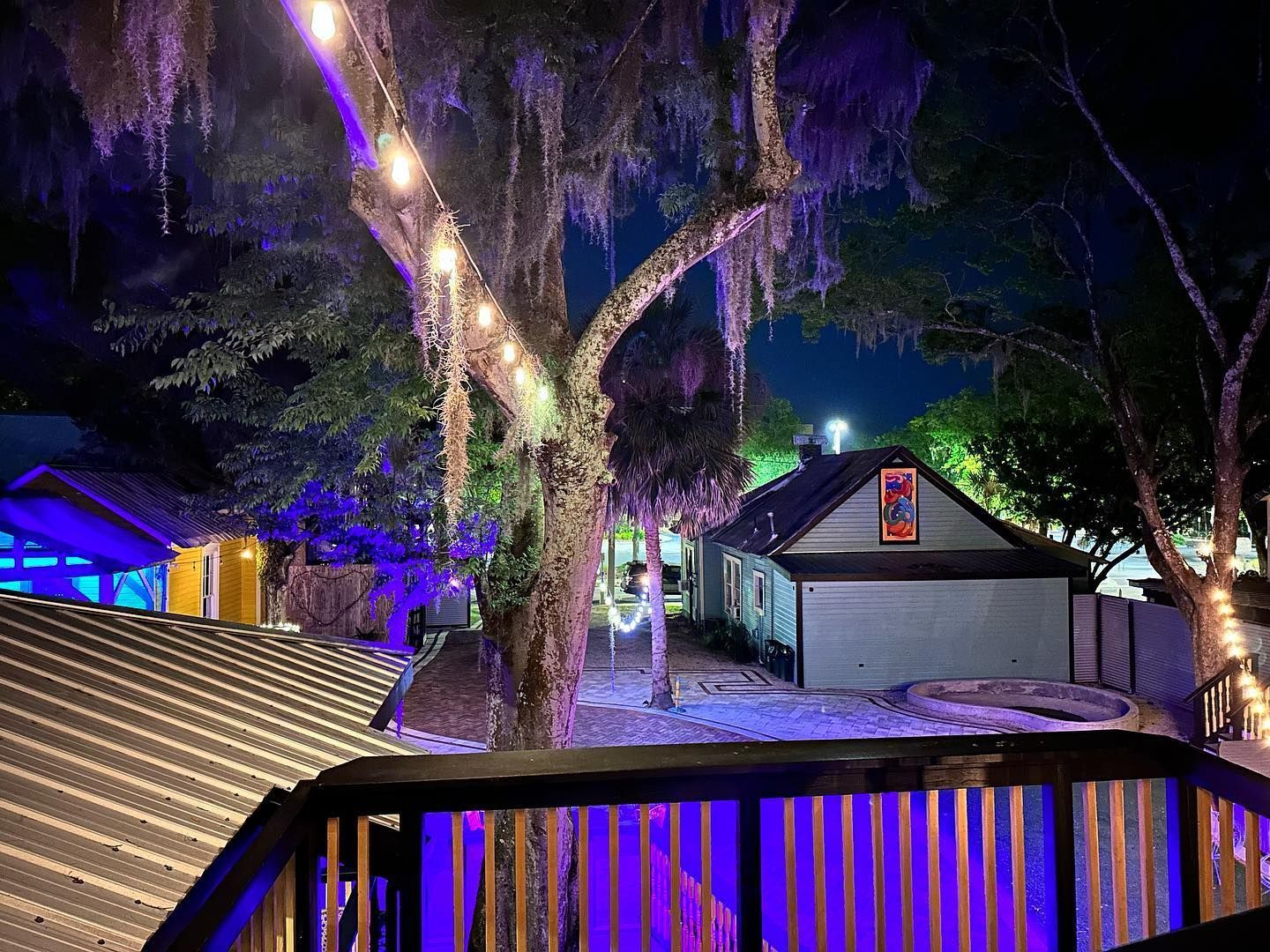
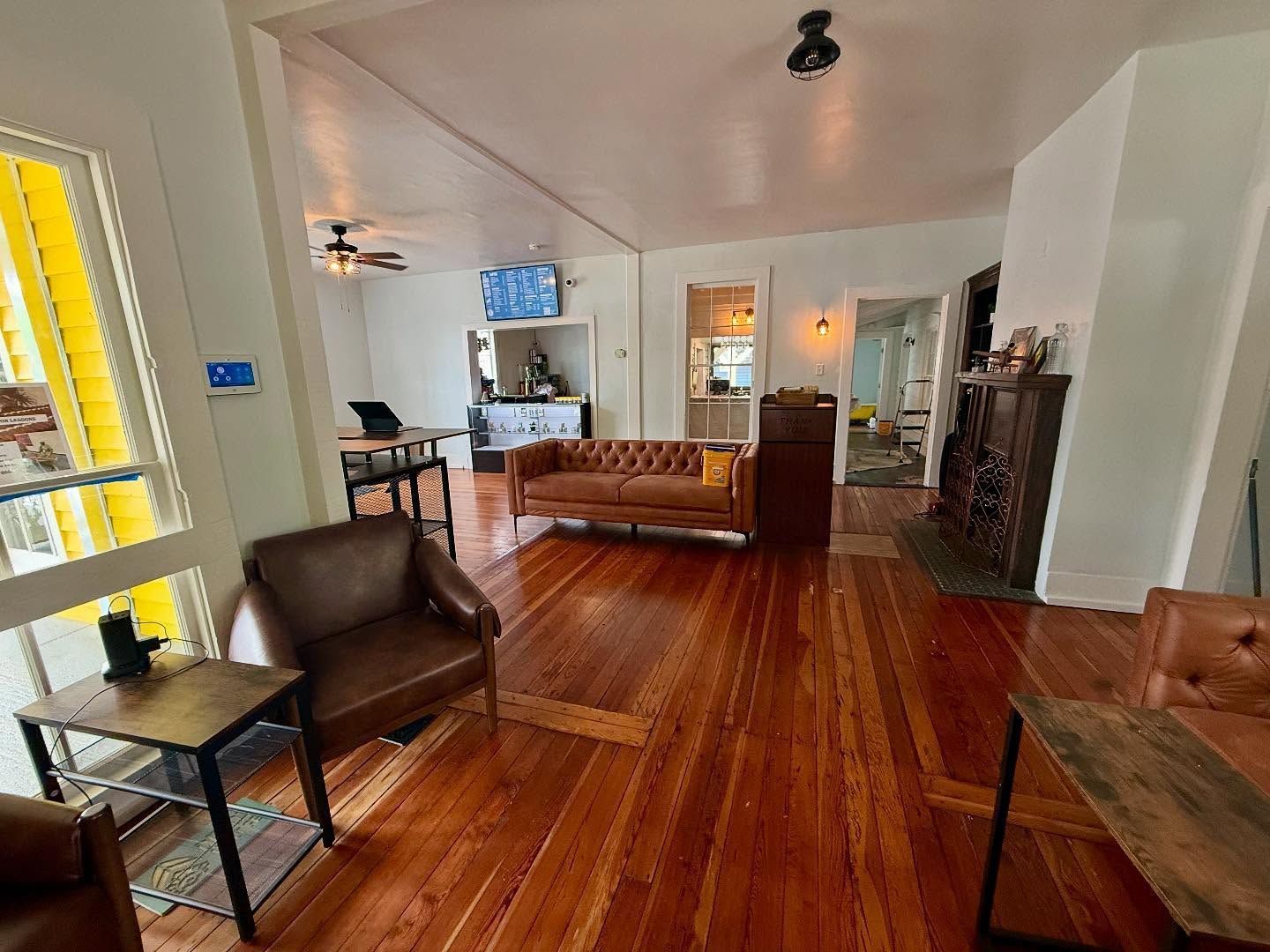
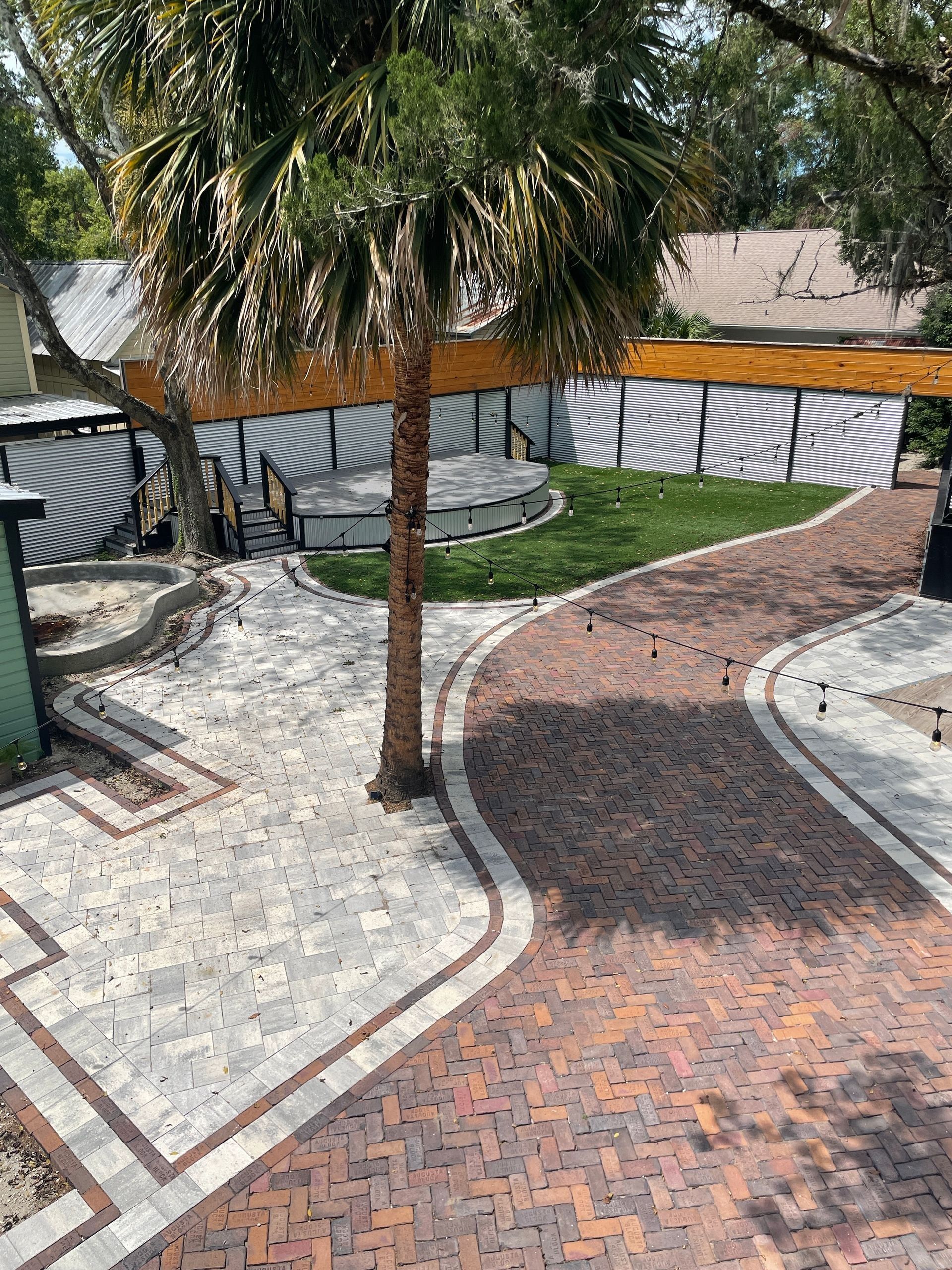
Depot Village sits right in the middle of it, an old house with rooms, a courtyard, and
a coffee bar, a few blocks from
Depot Park and a short walk from the food, the bars, and the stages. Park when you arrive and leave the car there. The springs are a quick drive in the morning. Everything else is on foot.
Make a trip of it
This is the whole appeal. You do not have to choose. Float wild springs by day, walk into a real downtown by night, and never start the car after dinner. One base holds both halves.
We are owner-run, in an old house in the middle of Gainesville, minutes from the roads out to the springs and steps from everything worth doing in town. Book direct, tell us what kind of day you are after, and we will hand you directions to the right water, plus the short list of where to eat and what is on when you get back.
Common questions
Which spring is closest to Gainesville? Poe Springs, around twenty-five minutes out near High Springs, with Ginnie and Devil’s Den close behind at about half an hour.
Which spring is best for tubing? Ichetucknee. The float down the river is the reason most people go.
Are the springs open year round? Yes. The water holds seventy-two degrees every day. Hours and access shift with the season, so check before you drive out.
Which spring has no alligators? Devil’s Den, because it sits inside a cave underground.
Can you see manatees at the springs? In the cold months, yes, mainly at Manatee Springs near Chiefland. We cover the where and when in our manatee guide.
Do you need to book ahead? For Devil’s Den, yes, reserve a snorkel or dive slot. For the river springs, the move is to arrive early in summer rather than book.
Are the springs good for kids? Yes. Poe and Gilchrist Blue are the easiest, with shallow water, sand, and room to sit. Ichetucknee is a gentle float for older kids who can stay on a tube.
Can you do the springs and downtown in one trip? Yes, easily. The springs are a short drive out in the morning, and
downtown Gainesville is on foot from your room at night. One base covers both halves.